


Sovereignty or Silence? Uganda’s New Bill Risks Criminalising Its Own Citizens
- By Henry Ssali - Governance Scholar
- May 4
- 4 min read
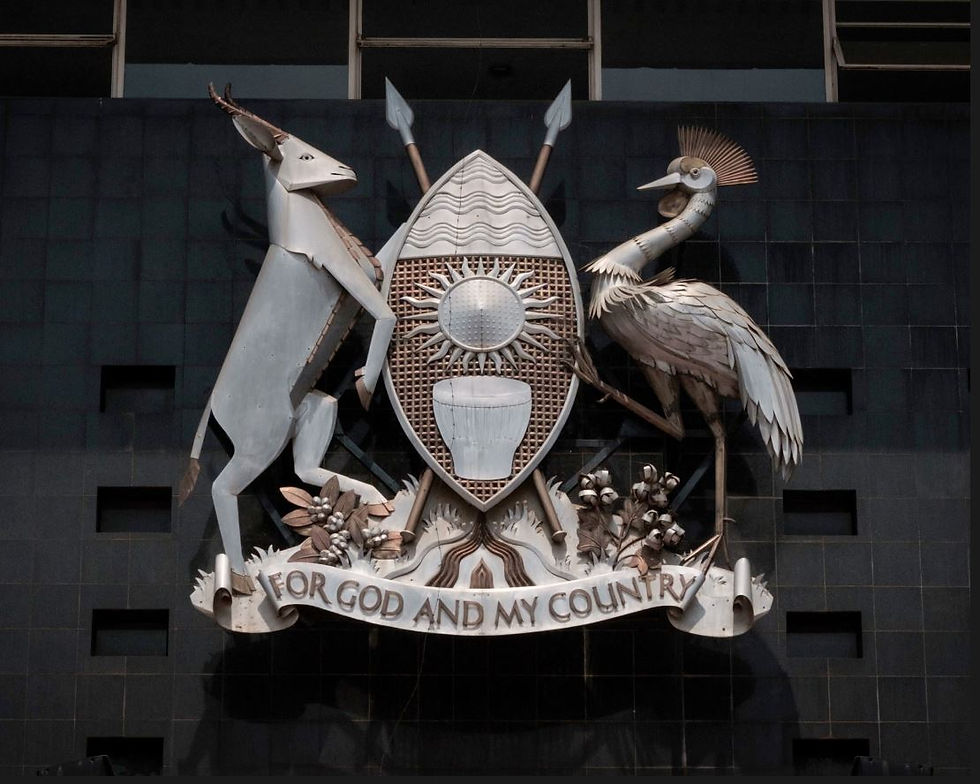
Opinion: Uganda’s Protection of Sovereignty Bill 2026 is framed as a defence of national autonomy. In a post-colonial state, that instinct is understandable. But as constitutional lawyer Phillip Karugaba argued in his submission to Parliament on Friday, April 24, 2026, the Bill does something far more consequential: it reconfigures sovereignty itself, away from the people and toward the state.
Article 1 of the Constitution is unambiguous: power belongs to the people, who exercise their sovereignty in accordance with the Constitution. Yet the Bill’s architecture subtly inverts this principle. Rather than protecting the people’s sovereignty, it centralises its practical exercise in the office of the Minister of Internal Affairs. As Karugaba noted, it is the Minister who determines who qualifies as a “foreigner,” who is deemed an “agent of a foreigner,” which activities fall within the Act, who may register, who may receive funding, and under what conditions. The same Minister may suspend or revoke registration, potentially without meaningful procedural safeguards.
This is not a technical regulatory scheme. It is a profound transfer of civic authority to a single appointed official. In effect, the Minister becomes the gatekeeper of public life, deciding which citizens may organise, advocate, receive support, or participate in shaping national discourse. That is not the protection of sovereignty. It is, as Karugaba warned, its displacement.
The danger is compounded by the Bill’s sweeping definition of “foreigner,” which includes Ugandans in the diaspora. This collapses the distinction between external actors and citizens exercising transnational engagement. A Ugandan abroad supporting a school, funding a civic initiative, or engaging in public debate could be recast as a regulated “agent.” In a country where remittances sustain livelihoods and diaspora voices shape national conversations, this is no small matter. It risks criminalising ordinary citizenship.
More troubling still is the Bill’s posture toward dissent. Clause 22(g), as highlighted in the parliamentary hearing, appears to criminalise influencing the public to oppose government policy. By that logic, the very act of criticising the Bill, as many Ugandans are now doing, could itself become unlawful.
This directly collides with long-standing constitutional jurisprudence, including decisions of the Constitutional Court affirming that the free flow of information and ideas is essential to the democratic process through which people exercise their sovereignty. If citizens cannot criticise policy, then sovereignty is no longer theirs in any meaningful sense.
The contradictions deepen in the electoral sphere. Clause 11 purports to protect the integrity of elections under Article 1(3), which guarantees that the people’s will shall be expressed through free and fair processes. Yet, as Karugaba observed, the Bill’s broad definition of “agent of a foreigner” could capture domestic election observers, civic educators, journalists, and media organisations, precisely the actors that help ensure electoral transparency. In seeking to guard elections from external interference, the Bill risks undermining the very mechanisms that make elections credible.
Uganda is not alone in confronting these tensions. Russia’s “foreign agents” laws began with similar justifications: transparency, sovereignty, and national security, but evolved into tools for suppressing civil society, independent media, and political opposition. Hungary has deployed sovereignty rhetoric to constrain NGOs and stigmatise foreign-linked organisations.
In Georgia, proposals along similar lines triggered mass protests, as citizens recognised the pattern: laws that begin as shields can quickly become instruments of control. Uganda’s Bill bears these hallmarks. Its offences are broadly framed, its penalties severe, and its discretionary powers concentrated. It creates a climate in which compliance depends not on clear legal standards but on administrative approval. In such an environment, the risk is not only prosecution but self-censorship, a quiet shrinking of civic space as individuals and organisations avoid activities that might attract scrutiny.
For diaspora Ugandans, the stakes are particularly acute. They are not peripheral actors; they are integral to the nation’s economic and social fabric. To redefine them as potential foreign agents is to sever a vital channel of participation. It suggests that citizenship is contingent, that distance dilutes belonging, and that engagement from abroad is inherently suspect.
What is at issue, then, is not whether Uganda should guard against undue foreign influence… it should. The question is how. A framework that promotes transparency, accountability, and proportional regulation is both legitimate and necessary. But a framework that centralises power, criminalises dissent, and reclassifies citizens as outsiders risks undermining the very sovereignty it claims to defend.
Karugaba’s intervention in Parliament distilled this tension with clarity: sovereignty is not an abstract principle to be invoked; it is a lived reality exercised through speech, participation, and collective decision-making. When a law concentrates that power in the hands of the state, particularly in a single office, it transforms sovereignty from a democratic right into an administrative privilege.
Uganda stands at a crossroads. It can affirm a vision of sovereignty rooted in its people, plural, participatory, and constitutionally grounded. Or it can adopt a more restrictive model, one that prioritises control over engagement. The language of the Bill gestures toward the former. Its structure, however, points decisively toward the latter.
Sovereignty, in the end, is not protected by silencing citizens. It is protected by trusting them.


Comments